 airanking.ccAI Adoption Rankingsairanking.ccAI Adoption Rankings
The AI concepts you hear most often, explained by category. Each section has one main video with related explainers listed alongside it — pick one to switch. The player loads only when you click the main frame. Videos belong to their creators; we say so where no matching public video exists.

Large Language Model (LLM) · Token
A neural network trained on vast text corpora to predict the next token, enabling it to generate, summarize and reason over natural language. Examples: GPT, Claude, Gemini, DeepSeek.
A layered model of interconnected nodes (neurons) that learns to map inputs to outputs by adjusting connection weights. The foundation of modern deep learning.
The basic unit a language model reads and generates — a word, part of a word, or a symbol. API pricing and context limits are usually counted in tokens.
A mapping of words, sentences or documents into numeric vectors so that semantic similarity becomes geometric closeness in vector space.
A multi-dimensional array used to represent model inputs, weights and activations; the fundamental data structure of deep learning frameworks.

Attention / Self-Attention
The dominant model architecture behind modern LLMs, built on self-attention instead of recurrence, allowing highly parallel training and long-range context modeling.
A mechanism that lets each token weigh the relevance of every other token in its context, so a word's representation adapts to its surroundings.
A network using convolutional filters to exploit spatial structure, especially effective for image and vision tasks.
A network with recurrent connections that carry information across sequence steps; historically used for sequences before Transformers, limited by vanishing gradients.
A specialized RNN with gated memory cells that can retain information over long sequences, mitigating vanishing gradients.
A pre-trained Transformer trained generatively at scale, then aligned for dialogue; the architecture family behind ChatGPT and many LLMs.
Backpropagation
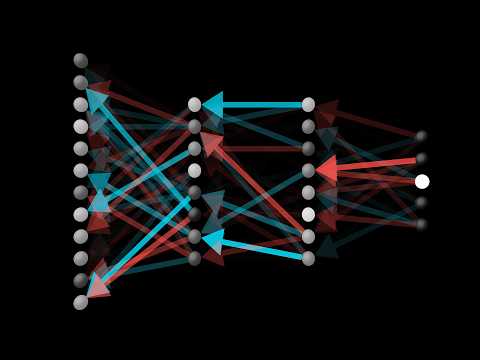
An algorithm that computes gradients of a loss with respect to every weight by propagating errors backward through the network, enabling learning.
An optimization method that iteratively adjusts model parameters in the direction that most reduces the loss.
Rectified Linear Unit: an activation function that outputs the input directly if positive, else zero. Widely used for its simplicity and effectiveness.
Additional training of a pre-trained model on a smaller, task-specific dataset to adapt it to a particular domain or behavior.

Multimodal Model
The input instruction given to a model; prompt engineering designs and refines these inputs to steer the model toward better, more reliable outputs.
A model that processes and reasons across multiple input types — text, images, audio, video — within one unified architecture.
A technique that retrieves relevant external documents and feeds them into the model's context before generating, grounding answers in real data.
A system that uses an LLM as its brain to plan, call tools, use memory and loop toward a goal — beyond a single chat response.
The run-and-observe cycle that drives an agent: receive a goal, let the model decide, call a tool, feed the result back, and repeat until the task finishes or a stop condition is met.
The model emits a structured call intent (name + arguments); the host program executes the real code or API and returns the result. The model itself runs nothing.
An open protocol that standardizes how applications expose tools and data to models, so tool providers and consumers connect without hand-written integrations.
A reusable package of instructions and workflows — often a Markdown file — telling an agent how to approach a class of tasks, which tools to use, and in what order.
Breaking a high-level goal into ordered, executable steps and revising the plan as new observations arrive — the planning half of an agent's reasoning loop.
An agent pattern that interleaves short reasoning traces with tool actions: think, act, observe, then think again. Every action is grounded in the latest observation.
Short-term context within a session plus persistent long-term storage of facts and past trajectories, retrieved on demand to keep an agent coherent across turns and tasks.
Several agents with distinct roles or tool sets collaborating on one task through orchestration, handoffs or sub-agents, instead of one all-purpose loop.
High-priority instructions injected before user input to define an assistant's role, boundaries and output rules; it normally outranks ordinary user messages.
The maximum number of tokens a model can attend to in one call, covering the system prompt, conversation history, retrieved documents and tool results.
Prompting or training a model to produce intermediate reasoning steps before the final answer, improving performance on math and multi-step reasoning tasks.
This site's core metric: estimated weekly usage in USD, derived from each model's request volume with token-length and cache-read adjustments. See Methodology for the exact formula.
This site's measure of a model's recent change in usage, used to flag fast-rising or declining entries rather than absolute size.
A site-defined indicator (0–100) synthesizing the 6-day trend and daily change of the overall usage total, presented as a weather-style summary. Reference only.